Wind and dust
Santa Ana winds from October into January load filters fast. Low airflow makes the furnace overheat and trip its limit switch.
Something feels off, but you can't tell what? Call Beaumont Furnace Fix. We'll set up a diagnostic visit. Ask them to explain what they found and your repair options before any work begins. No forms.
Beaumont Furnace Fix is a locally owned and operated furnace repair company based in Beaumont, California, serving Beaumont and nearby towns. Call us for furnace repair, tune-ups and replacement.
Last updated October 15, 2026. Sources are linked on this page.
A good furnace diagnostic doesn't start with a guess. The heating pro runs the furnace through a full start-up and watches each step.
Where it stops tells them where to look. A furnace safety inspection is different from a quick look, because your technician tests how the furnace actually behaves.
A real furnace safety check goes further than a quick look. Then they test the part, not just the symptom.
A furnace that blows cold air could have a bad igniter, a dirty flame sensor or a clogged filter. Each one needs a different fix.
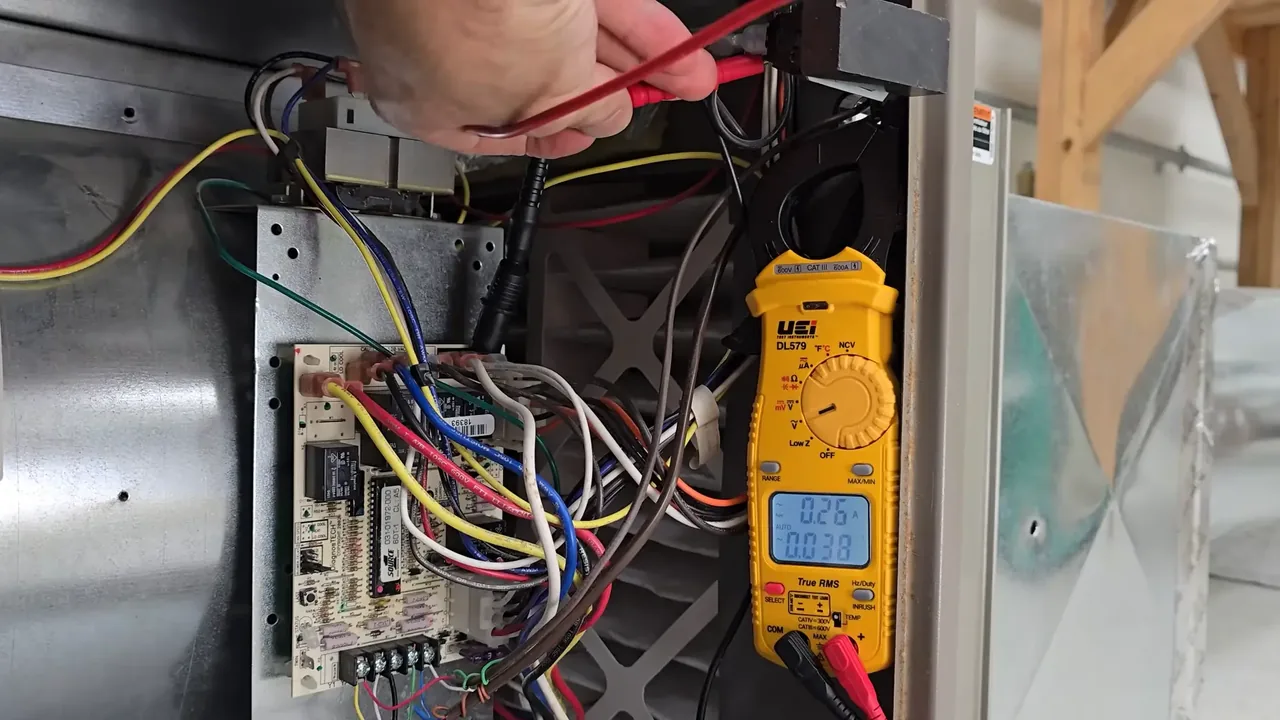
A ten-minute look with a flashlight can miss a lot. Depending on the symptom and the equipment, ask your technician which tests and tools they plan to use. Each of these answers a specific question.
| Tool | What it checks | What a quick look can miss |
|---|---|---|
| Combustion analyzer | How cleanly the gas burns, from the exhaust | Dirty burning that raises carbon monoxide |
| CO meter | Carbon monoxide in the air and the flue | A leak that hasn't set off an alarm yet |
| Inspection camera | Inside the heat exchanger | Proof of a crack, or proof there isn't one |
| Multimeter (microamp setting) | The flame sensor signal, ignitor and capacitor | A weak part that still works some of the time |
| Manometer | Gas pressure at the valve | Low pressure behind delayed ignition or a weak flame |
| Thermometer and static pressure gauge | Temperature rise and duct pressure | Airflow trouble that overheats the furnace |
Every provider works a little differently. When the visit is booked, it's fair to ask which of these tools they'll use.
Beaumont Furnace Fix doesn't inspect or certify furnaces. We do the testing and stand behind it. Check any contractor's license at cslb.ca.gov before work starts, ours included.
Most furnaces built in the last 20 years have a small light on the control board. You can usually see it through a little window in the lower panel.
When something goes wrong, it blinks a pattern. A code pointing at ignition? Read about furnace ignitor repair.
Count the blinks. Then look for a sticker on the inside of the furnace door that explains the codes.
Some boards flash a short code, like 3 blinks, then pause. Write it down and tell the pro when you call. It can save real time on the visit.
Don't remove the panel to look. Many furnaces have a safety switch behind the door. Taking the door off shuts the furnace down and can clear the code you were trying to read.
Ever wonder why the same problems show up on so many streets at once? Weather is a big part of it.
Beaumont sits high in the San Gorgonio Pass, so a heating pro here sees a few patterns again and again. Planning ahead?
Use our fall furnace checklist, or read furnace trouble by the numbers for the safety facts behind a good check.
Santa Ana winds from October into January load filters fast. Low airflow makes the furnace overheat and trip its limit switch.
A furnace that starts and stops every few minutes is often choking on airflow or losing its flame signal.
Months off let dust settle on the flame sensor and burners. The first cold night is when it shows.
Strong gusts can push back on the vent and trip the pressure switch. The furnace stops until the wind drops.
Some older homes still have a standing pilot light. A weak thermocouple lets it go out.
Many local homes still run their first furnace. Many of those are 80% AFUE models near the end of their life.
Not every furnace problem is an emergency. But some are. Here's a simple way to sort them.
| What you notice | What to do | Why |
|---|---|---|
| Gas smell, like rotten eggs | Leave now | Possible gas leak. Call SoCalGas or 911 from outside. |
| Carbon monoxide alarm going off | Get outside | CO has no smell. Call 911. |
| Yellow or orange flame, or soot | Turn it off, call | Gas isn't burning cleanly. Carbon monoxide risk. |
| Furnace shuts down again after one reset | Call soon | A safety control keeps tripping for a reason. |
| Weak airflow or one cold room | Book soon | Usually airflow or ductwork. Not urgent on its own. |
| Light dust odor right after a tune-up | Expected | Cleaned parts heating up. Call if it lasts. |
This is the finding that turns a repair into a replacement. A heat exchanger with a real crack can't be patched, and on an older furnace it usually ends with a new unit.
So it deserves more proof than any other diagnosis. The EPA says worn or poorly adjusted furnaces can release carbon monoxide indoors, which is why test readings matter.
A real crack can be shown with a photo, a camera view or a combustion reading. Can't see it?
Then you don't have to say yes yet. Heating pros who've done this for years say true cracks are found far less often than they're claimed.
The California Contractors State License Board has warned homeowners about cheap check-ups that turn into high-pressure pitches for a new system. Most pros are honest. Asking for proof protects you either way.
A second opinion on a big job is normal. Nobody fair will be bothered by it.
A furnace inspection isn't only for broken heat. Buying a resale home in Sundance or along Oak Valley Parkway?
Many of those homes still have their original furnace from the 2000s. A general home inspector looks at a lot of things. A heating pro looks deeper at one.
Ask for a heating inspection before closing. Age, heat exchanger and venting matter most.
A recent inspection can answer a buyer's questions before they come up.
Landlords must keep heating in good working order. Tenants should report problems in writing.
Past 15 years? A yearly safety check matters more each winter.
California law has required carbon monoxide alarms in most single-family homes with a gas appliance, fireplace or attached garage since 2011. Test yours when you test your smoke alarms.
Why does this matter so much? Accidental carbon monoxide kills more than 400 Americans a year and sends over 20,000 to the ER.
A yearly safety check and working alarms are the two simplest ways to stay out of those numbers.
A cracked heat exchanger is serious, and it's also one of the findings people most often want a second look at. Before you agree to anything, ask these.
Before the visit, ask when your technician can come, whether there's a charge for the diagnostic visit, and confirm that nothing will be repaired until you approve it.
A start-up test, a flame and burner check, a heat exchanger look, a venting check, an airflow check and a test of the safety controls. Many pros also take a carbon monoxide reading.
Ask what's included when your technician confirms the visit, since every company runs it a little differently and uses different tools.
You usually can't tell on your own. Warning signs include soot, a yellow or wavy flame, a CO alarm or a strange smell.
A heating pro confirms it with a camera, a close visual check or a combustion reading. Always ask to see the proof before agreeing to a replacement, and get a second opinion if anything feels off.
Yes. A furnace can heat the house and still vent poorly or burn dirty.
That's why working CO alarms matter, since carbon monoxide has no smell or color. If an alarm goes off, get everyone outside and call 911.
Have the furnace checked with a CO meter before you use it again.
They're error codes from the control board. Count the blinks, like three blinks and a pause, then check the code sticker inside the furnace door.
Write the code down and share it when you call. It points the pro toward the right part faster.
Don't pull the panel off to look, since that can clear the code.
Not quite. An inspection or diagnostic finds out what's wrong, or whether the furnace is safe.
A tune-up is yearly upkeep, like cleaning the flame sensor and burners. A good tune-up includes basic safety checks, but a diagnostic goes deeper into one problem with test tools. Ask which one you're booking before the visit.
Yes, on any big job. A second opinion is normal, especially when someone says the heat exchanger is cracked or the whole furnace needs replacing.
A fair provider won't mind. You can also look up any contractor's license at cslb.ca.gov before you agree to anything. Taking a day to decide is completely reasonable.
Yes, in most homes. Since 2011, California has required CO alarms in single-family homes with a gas appliance, a fireplace or an attached garage.
Put one outside each sleeping area and on every level. Test them monthly, and replace the units when they reach the end-of-life date printed on the back.
Tell us what the furnace is doing. We'll take it from there.
(234) 567-8911Call now