Lights, then shuts off
Burners light for 3 to 4 seconds, then go out. Often a dirty flame sensor.
Furnace lights for a few seconds, then quits? Call Beaumont Furnace Fix. We'll assess the ignition problem and explain your repair options. One call. No forms.
Beaumont Furnace Fix is a locally owned and operated furnace repair company based in Beaumont, California, serving Beaumont and nearby towns. Call us for furnace repair, tune-ups and replacement.
Last updated October 15, 2026. Sources are linked on this page.
Every gas furnace needs a way to light the burners and a way to prove the flame is there. Which one you have depends mostly on age.
Not sure which kind is in yours? Look through the small window during start-up.
| Ignition type | What you'll see | Found in | Common failure |
|---|---|---|---|
| Hot surface ignitor | A part glows bright orange, then the burners light | Most furnaces from the last 20+ years | Cracks and stops glowing |
| Spark or intermittent pilot | Clicking sparks, then a small pilot, then burners | Some mid-age furnaces | Weak spark or dirty pilot |
| Standing pilot | A small flame that stays lit all the time | Older furnaces | Thermocouple wears out |
When a furnace won't ignite, the problem is in the first few seconds of start-up. Watch it once through the window and you'll know a lot.
Then tell the pro exactly what you saw. A furnace clicking but never lighting is a classic sign, and it's the reason many people look for furnace ignitor repair.
If the furnace runs but the air stays cold, see why a furnace blows cold air.
Burners light for 3 to 4 seconds, then go out. Often a dirty flame sensor.
The ignitor never lights up. It's likely cracked, or the control board isn't sending power.
The ignitor works, but no gas arrives. Often the gas valve, a closed shut-off or low gas pressure.
It lights, then goes out when you let go. Usually the thermocouple.
Delayed ignition. Gas builds up before it lights. Stop using it and call.
The furnace locks out after failed tries. Count the blinking light.
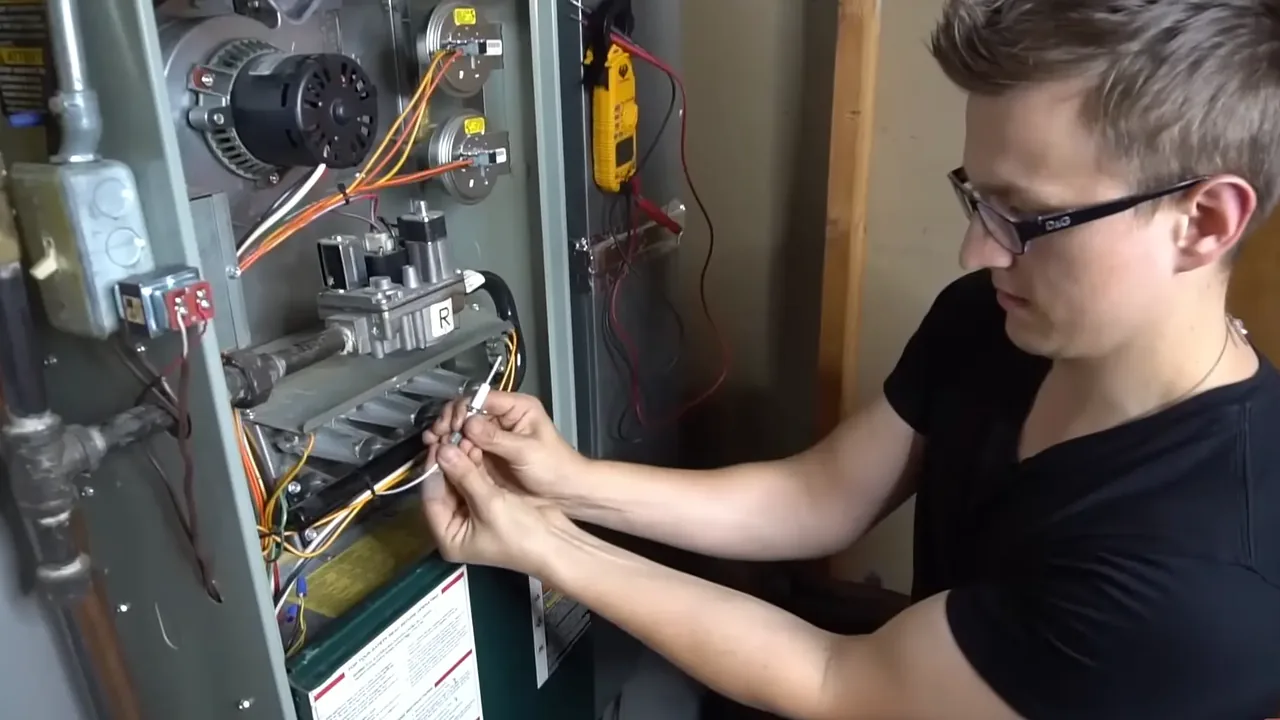
The flame sensor is a thin metal rod that sits in the burner flame. It sends a tiny electrical signal to the control board that says, "yes, there's fire."
No signal, and the board shuts the gas valve within seconds. That's a safety feature, not a defect.
A flame sensor is a thin rod that confirms the burners are lit, which is why a dirty one can make the furnace shut the gas off.
Over time, the rod gets a light coating that blocks the signal. In Beaumont, furnaces sit idle all summer, and dust from the Pass settles inside.
So the first cold night in November is when many of them start short cycling.
A heating pro usually cleans the rod with a fine abrasive pad and checks the signal with a meter. If it's cracked, badly worn or the problem keeps coming back, they replace it.
Sometimes the real cause is a loose ground wire or a dirty burner, so the test matters.
Can you clean a flame sensor yourself? You may see online steps for it.
But it means opening furnace equipment near electrical and gas parts. Follow your manufacturer's instructions exactly, or have a qualified provider do it.
Don't bypass safety controls, and don't keep resetting the furnace. If trouble returns within weeks, something else may be wrong.
Most newer furnaces use a hot surface ignitor. Parts boxes often say furnace igniter instead. It's the same part. It's a thin piece of ceramic that glows hotter than a stove burner.
Every start-up heats it up and cools it down. Over the years, that wears it out until a hairline crack stops it from glowing.
Ignitors can't be cleaned or patched. When one fails, it's replaced.
They're fragile, so even touching the glowing part with bare fingers can shorten its life. That's one more reason this is a job for someone with the right part and a meter.
A good pro tests before swapping anything. Why pay for an ignitor when the real problem was a dirty sensor?
This chart shows how each small part gets checked. If the cause looks fuel-related, see gas furnace repair. If airflow is the issue, read about blower motor repair.
| Part | Can it be cleaned? | How it's tested | When it gets replaced |
|---|---|---|---|
| Flame sensor | Yes | A meter reads the tiny flame signal in microamps | Cracked, badly worn, or the signal stays weak after cleaning |
| Hot surface ignitor | No | Watching the glow, plus a resistance check with a meter | Cracked, won't glow, or reads out of range |
| Spark ignitor | Sometimes | Checking the spark and the gap | Cracked ceramic or a worn electrode |
| Thermocouple (standing pilot) | No | A millivolt reading while the pilot burns | Pilot won't stay lit, or the reading is low |
| Pilot tube and burners | Yes | Looking at the flame shape and color | Rusted through or damaged |
Ask the pro which test they ran and what the reading was. A real answer sounds like a number, not a guess.
Replaced the ignitor last winter and it failed again? Then the part probably isn't the whole story. A good heating pro looks at what's making it work so hard.
A clogged filter or blocked ductwork makes the furnace overheat and restart over and over. More starts mean more wear.
An oversized furnace or a badly placed thermostat can start the burners many times an hour.
If the vent or pressure switch acts up, the furnace keeps retrying ignition. Gusty nights in the Pass make it worse.
A weak blower motor lets heat build up, tripping the limit switch and forcing restarts.
Flames escaping the burner area can point to a blocked vent or a heat exchanger problem. That's a carbon monoxide risk.
Older furnaces, often 80% AFUE units near 15 to 20 years old, just wear out faster.
Fixing the root cause can save you from the same call next winter. For airflow and fan problems, see blower motor repair. For safety concerns, start with a furnace inspection.
Ignition trouble is usually a small part. A few signs mean something bigger, so shut the furnace off and don't restart it.
| Sign | What to do |
|---|---|
| A loud boom or delayed ignition | Turn it off and call a pro |
| A burning smell that doesn't fade fast | Turn it off and call a pro |
| Flames outside the burner area (rollout) | Turn it off. This can mean carbon monoxide |
| Yellow flames, soot or scorch marks | Turn it off and call a pro |
| The furnace locks out again and again | Stop resetting it and call a pro |
| A CO alarm or a gas smell | Leave the house and call 911, then SoCalGas |
Never touch, bypass or swap ignition parts while the furnace has power or the gas is on. See the emergency furnace repair page for what to do next.
Some homes on the older streets off 6th Street and Beaumont Avenue downtown still have a furnace with a standing pilot light. The pilot burns all the time.
A thermocouple sits in its flame and tells the gas valve it's safe to open. Some homes around downtown Beaumont still have pilot-style heaters.
When the thermocouple wears out, the pilot won't stay lit after you let go of the button. A dirty pilot tube or a drafty closet can cause the same thing.
SoCalGas customers can schedule a pilot relight at no charge. If it keeps going out after that, a pro should check the thermocouple and the gas valve.
Ignition problems have a few look-alikes. These details help us narrow it down before we arrive.
Don't bypass safety switches, keep resetting a lockout, or touch ignition parts with gas or power connected. For a gas smell or a CO alarm, leave and call 911. The CPSC carbon monoxide guide explains what to do.
A dirty flame sensor is the most common reason. The burners light, the sensor can't confirm the flame, and the control board shuts the gas valve after 3 to 4 seconds.
A loose ground wire, a weak ignitor or low gas pressure can cause the same pattern. Count how long the flame lasts and tell the pro when you call.
Watch through the window during start-up. If the ignitor never glows, or you can see a crack, it's likely bad.
A pro can confirm it with a meter in a few minutes. Sometimes the ignitor is fine and the control board isn't sending it power, so testing first saves you from buying a part you didn't need.
The ignitor lights the gas; the flame sensor proves the flame is there. If the ignitor fails, nothing lights at all.
If the flame sensor fails, the burners light briefly, then shut off after a few seconds. Both sit right next to the burners, so a heating pro usually checks them together on the same visit.
Yes. A pro usually cleans the rod with a fine abrasive pad and checks the signal with a meter.
Many handy homeowners do it themselves after shutting off power and gas.
If the problem comes back within weeks, the sensor may need replacing, or something else is wrong, like a loose ground wire or dirty burners.
Usually a worn thermocouple. That's the small sensor that sits in the pilot flame and tells the gas valve it's safe to open.
A dirty pilot tube, a draft or a weak gas valve can cause it too. SoCalGas customers can schedule a pilot relight at no charge. If it keeps going out after that, call a pro.
Some handy homeowners do, but it's easy to get wrong. Ignitors are fragile, and even skin oil on the ceramic can shorten their life.
Models are specific to each furnace, and the real cause may be the control board or wiring. If you're not comfortable shutting off power and gas, leave it to a pro with a meter.
Tell us what the furnace is doing. We'll take it from there.
(234) 567-8911Call now